Variety field guide
What to expect from Cascade Ruby-Gold Flint Corn Seeds
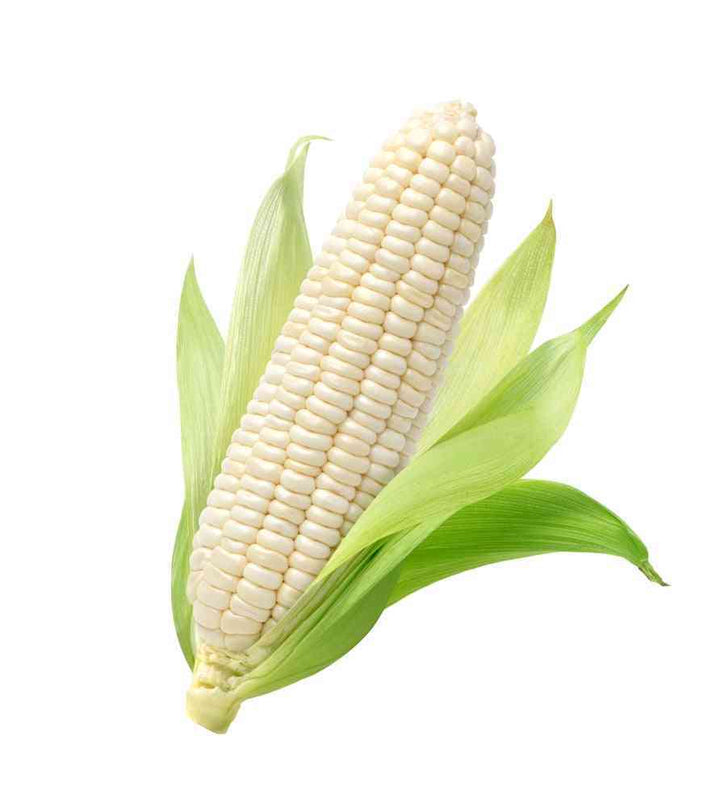
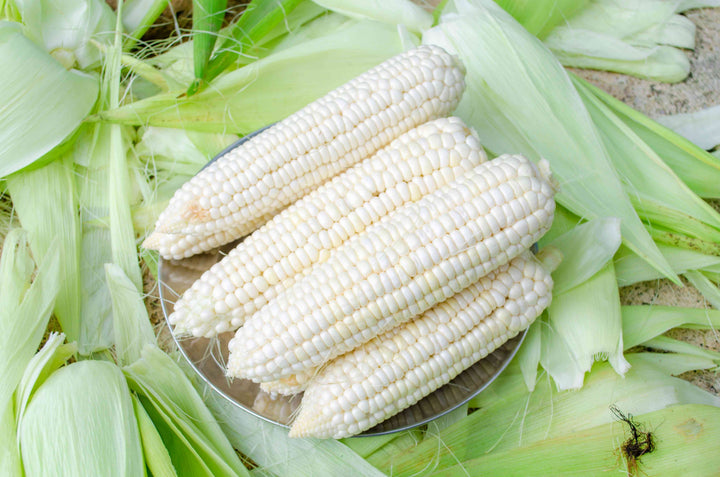
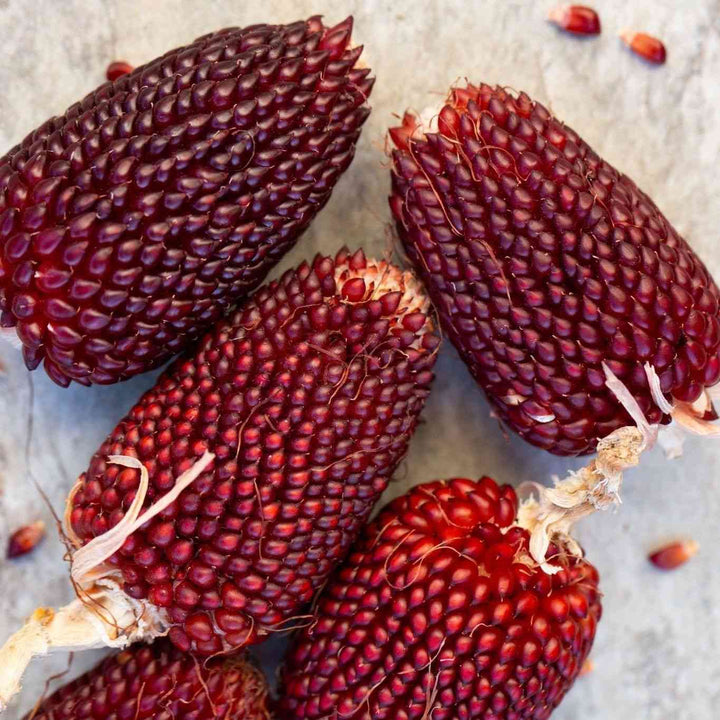
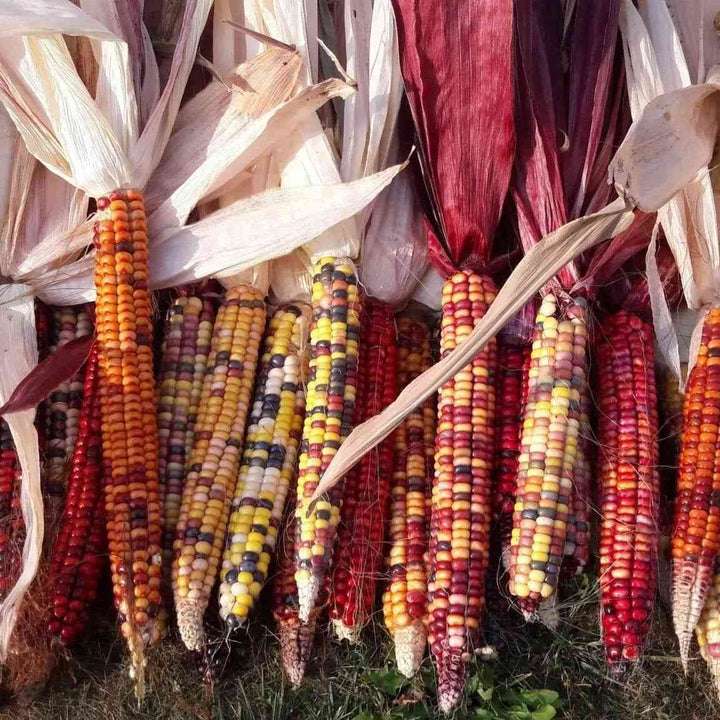
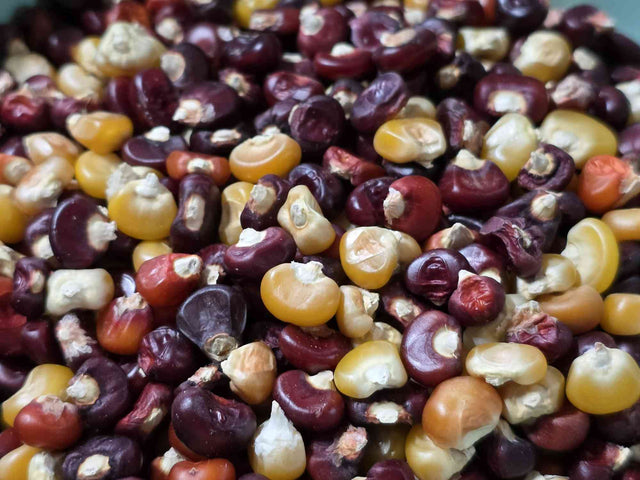
Bred by Carol Deppe for early harvests, this flint corn bears solid-colored ears in red, bronze, gold and yellow. Hard kernels grind into flavorful meal for cornbread, polenta and johnnycakes.
Open the complete descriptionHide the complete descriptionVariety traits, flavor, garden use, and the complete description
Bred by Carol Deppe for early harvests, this flint corn bears solid-colored ears in red, bronze, gold and yellow. Hard kernels grind into flavorful meal for cornbread, polenta and johnnycakes. The vigorous plants reach about 5 1/2 ft.; harvest is around 85 days, with extra drying time as needed. Preserve several ear colors when saving seed to maintain the variety's range.
Minimum seeds per packet: 20 seeds.
Early flint corn with rich color and kitchen purpose.
Variety and background
Carol Deppe bred Cascade Ruby-Gold at Fertile Valley Seeds from a cross of Roy’s Calais and Byron flint corns, selecting an early flour-and-meal crop for short, cool growing seasons. The Open Source Seed Initiative records the variety and its January 2015 pledge. Ears are individually solid-colored, while the population includes red, brown, orange, gold and yellow. It is not a claim that every cob carries a rainbow of different kernels.
Sow and grow
Sow after frost in soil above 60 F, 1 in. deep, 8-12 in. apart; rows 30-36 in. apart in a block. Allow 7-10 days in warm soil. Water through tasseling and ear fill.
Season care
Corn is wind-pollinated, so plant a block of several short rows rather than one long, isolated row. Sow after frost in warm soil and thin to 8–12 in. between plants, with rows about 30–36 in. apart. Supply fertility according to a soil test and water consistently during tasseling, silking and grain fill. The breeder lists plants around 5 1/2 ft. tall, with ears commonly 8–12 in. long.
Harvest and use
Dry ears until kernels are hard; shell and store dry. Isolate from other corn. Save many plants together, not one ear.
Saving seed
Corn is a strongly outcrossing crop. Isolate from other flowering corn by distance or flowering time, and save from many healthy plants across the planting rather than a single attractive ear. Include the different ear colors when selecting so the population keeps its range. Dry ears until kernels are fully hard, shell carefully, and store seed dry and cool. Include the OSSI pledge whenever transferring this seed or its derivatives.
Common problems
Poor pollination can leave gaps on the ear, particularly in single rows or during drought. Watch for lodging, ear-feeding insects and molds during dry-down. Dry damaged ears separately and discard moldy grain. Rainy autumn weather may require finishing the harvest under cover.
Open Source Seed Initiative pledge
You have the freedom to use these OSSI-Pledged seeds in any way you choose. In return, you pledge not to restrict others' use of these seeds or their derivatives by patents or other means, and to include this Pledge with any transfer of these seeds or their derivatives.
Frequently asked questions
Is it sweet corn?
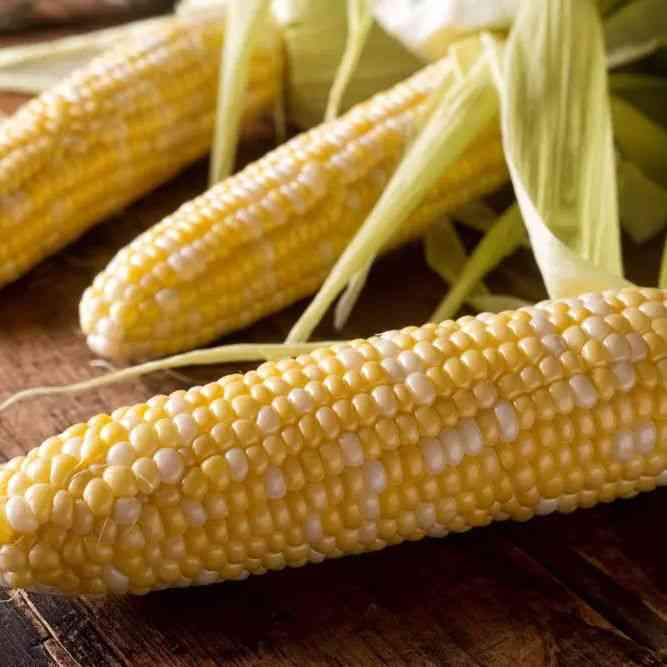
No. It is flint corn grown primarily for dry grain, meal and flour, including cornbread, polenta and johnnycakes.
Are the ears multicolored?
The breeder describes solid-colored ears in a population with several colors, rather than differently colored kernels on every ear.
How early is it?
The breeder lists approximately 85 days; allow additional curing time until grain is completely dry for storage.
What does OSSI-Pledged mean?
The seed remains freely usable, and recipients pass on the pledge without restricting others’ use through patents or similar means. The full pledge appears below and on the packet.